
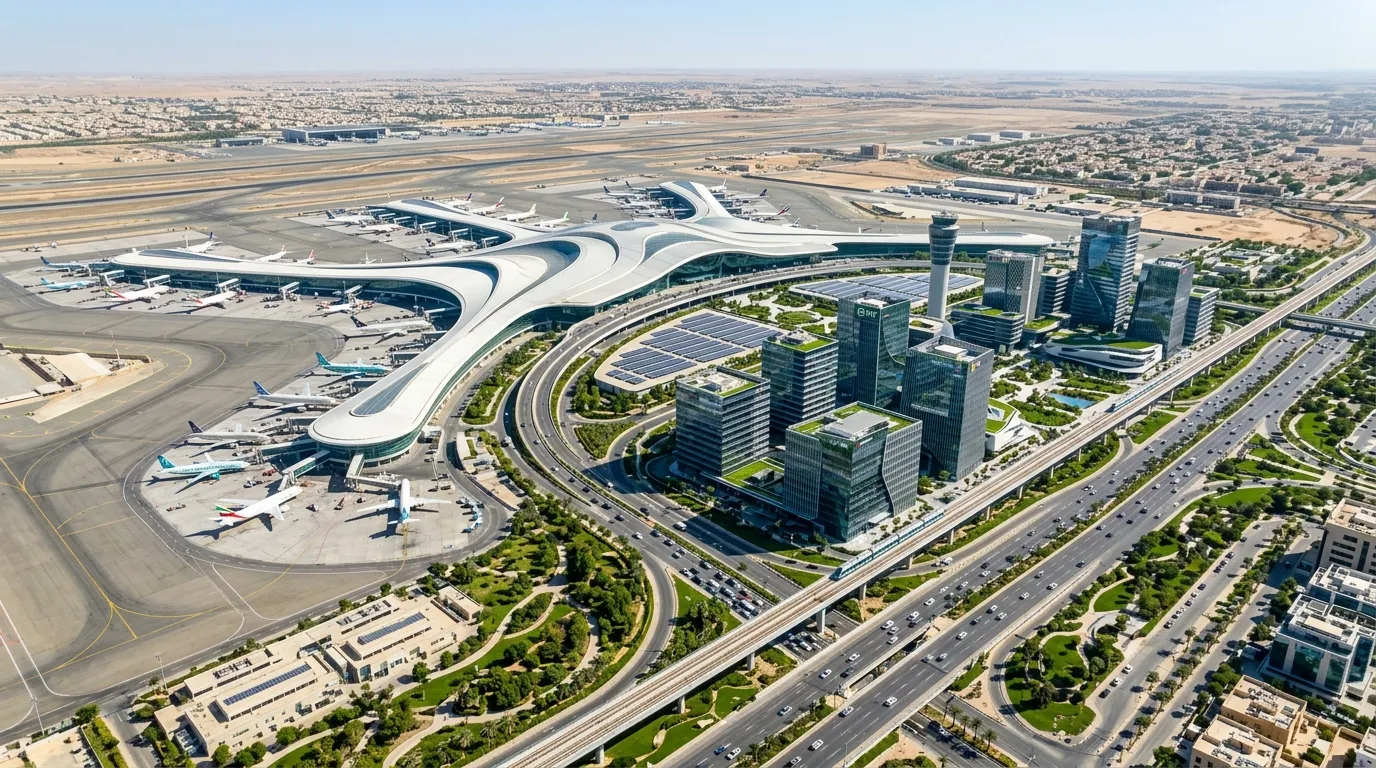

King Salman International Airport (KSIA) 2026: Aerotropolis & North Riyadh Real Estate Guide
As Saudi Arabia accelerates toward becoming a premier global aviation, tourism, and logistics crossroad, the King Salman International Airport (KSIA) represents one of the most ambitious infrastructure megaprojects in modern history. Spanning an enormous 57 square kilometers in North Riyadh, KSIA is engineered to serve up to 120 million passengers annually by 2030 (scaling to 185 million by 2050) and process 3.5 million tons of air cargo.
In 2026, the transition from vision to urban execution has taken center stage. With 12 square kilometers strictly allocated for master-planned mixed-use real estate—backed by major developer consortiums including Sumou, Retal, Ajdan, Kinan, and Mohammed Al Habib—the “aerotropolis” phenomenon is actively redefining property valuations across North and Northeast Riyadh. Here is your comprehensive 2026 investment and district guide.
Key Takeaways
- 12 Sq Km Aerotropolis Zone: A dedicated city within an airport featuring residential communities, commercial office towers, hospitality complexes, and retail boulevards designed by Foster + Partners.
- Major Developer Partnerships: King Salman International Airport Development Company (KSIADC) has formalized MoUs with tier-one national real estate giants to build out integrated residential and commercial clusters.
- North Riyadh Real Estate Ripple Effect: Neighboring districts including Al Narjis, Al Arid, Al Yasmin, and Banban continue to experience sustained demand for modern executive apartments and corporate offices.
- High Logistics & Rental Yields: Proximity to the Special Integrated Logistics Zone (SILZ) and international air transit corridors delivers average residential rental yields of 8.5% to 11.0% for furnished corporate housing.
The Aerotropolis Model: A City Within an Airport
Unlike conventional transit terminals, an aerotropolis integrates the airport at the center of an economic and residential powerhouse:
- Integrated Residential Communities: Modern eco-villas, luxury townhouses, and executive apartments providing walk-to-work convenience for tens of thousands of aviation, tech, and multinational executives.
- Aviation & Logistics Hubs (SILZ Integration): Direct bonded access to cargo zones, bonded manufacturing, cold-chain pharmaceutical facilities, and regional e-commerce fulfillment centers.
- Hospitality & MICE District: Five-star transit hotels, convention centers, and corporate meeting hubs servicing global business travelers without requiring them to enter downtown traffic.
- Entertainment & Retail Boulevards: Duty-free luxury retail, fine-dining promenades, and cultural exhibition spaces open to both ticketed travelers and local residents.
Impact on Surrounding North Riyadh Districts (2026)
The scale of KSIA is reshaping capital flows across Riyadh’s northern growth trajectory:
1. Al Narjis & Al Arid: Executive Residential Centers
Positioned along King Abdulaziz Road and Airport Road, these districts offer prime access to both KSIA and King Abdullah Financial District (KAFD). In 2026, ready 2- and 3-bedroom luxury apartments here trade with strong liquidity, favored by multinational airline crews, diplomats, and corporate managers.
2. Banban & Al Malham: Industrial & Logistics Corridors
Further north along the Thumamah Road and Route 550, raw land and warehousing plots have seen elevated institutional interest. Logistics operators and supply-chain firms are acquiring acreage to build high-spec fulfillment facilities servicing the new cargo runways.
3. Al Rimal & Janadriyah: Suburban Mixed-Use Growth
To the east and southeast of the airport, affordable residential housing compounds and family retail centers provide attainable housing options for airport operational personnel.
Investment Outlook: Key Metrics for 2026 Property Buyers
When assessing real estate opportunities within the KSIA influence zone, investors should monitor the following parameters:
- Transit Connectivity: Properties directly adjacent to Riyadh Metro Line 4 (Yellow Line) and major orbital expressways command a 15% to 25% pricing premium.
- Furnished Corporate Rentals: Short-to-mid term corporate leasing to aviation consultants, tech vendors, and expatriate executives generates higher net operating income than standard annual residential leases.
- Wafi-Certified Off-Plan Acquisitions: Partnering with developers registered under the Ministry of Housing’s Wafi program ensures escrow account protection and guaranteed delivery timelines.
Frequently Asked Questions
How big is King Salman International Airport?
King Salman International Airport spans approximately 57 square kilometers in North Riyadh, incorporating the existing King Khalid International Airport footprint and adding six parallel runways and 12 sq km of dedicated real estate.
Can private investors buy properties inside the KSIA aerotropolis?
Yes. Through partnerships between KSIADC and master developers like Sumou, Retal, and Ajdan, mixed-use commercial, hospitality, and residential properties are being developed for institutional leasing and private purchase in designated investment zones.
Which Riyadh neighborhoods benefit the most from the new airport?
Northern districts including Al Narjis, Al Arid, Al Yasmin, Banban, and Al Rimal benefit the most due to direct arterial highway links, upcoming metro extensions, and high executive housing demand.
Looking to explore off-plan developments, executive residential compounds, or logistics land in North Riyadh near King Salman International Airport? Contact Lebami today to consult with our licensed Riyadh real estate specialists.
%202026:%20Aerotropolis%20&%20North%20Riyadh%20Real%20Estate%20Guide)