
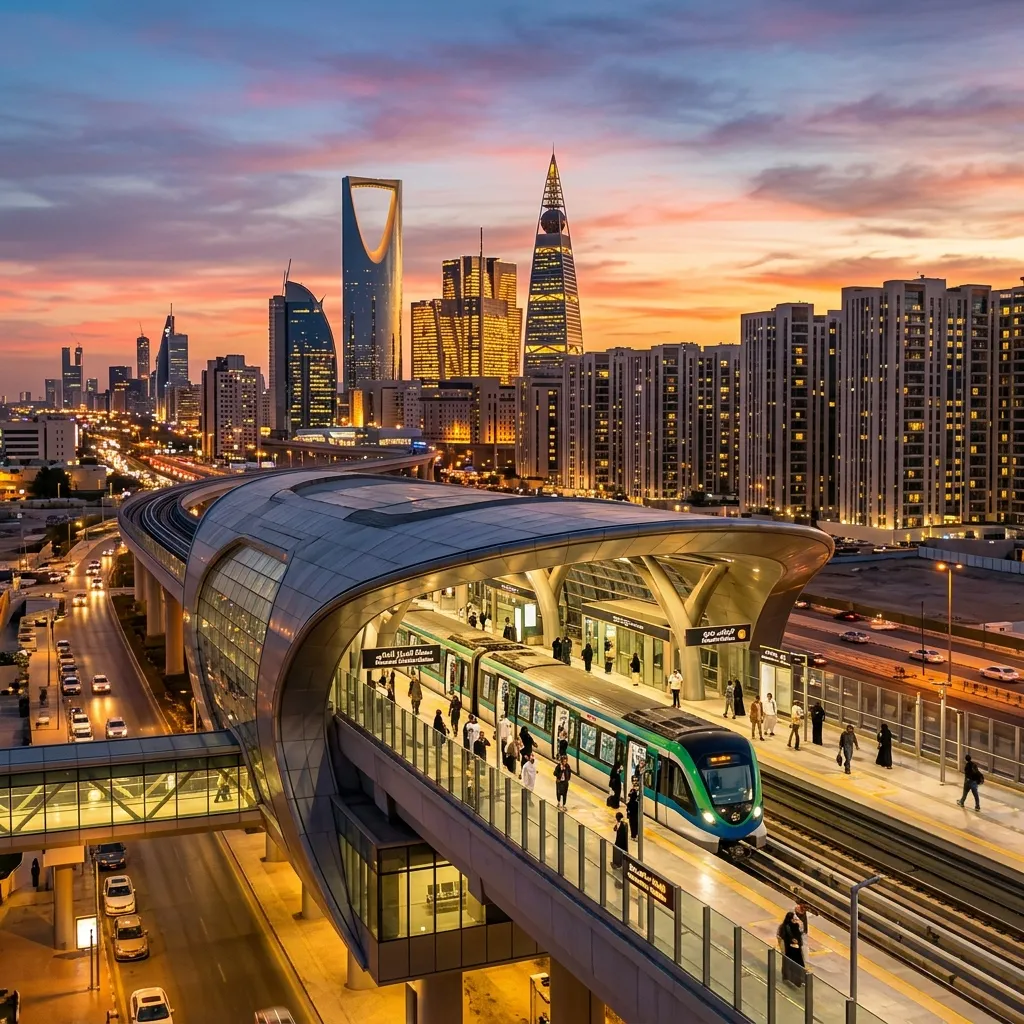

How the Riyadh Metro Expansion is Reshaping Property Values in 2026
Public transit infrastructure historically rewrites property valuations overnight. The Riyadh Metro is no exception. As one of the most ambitious urban transit projects globally, its transition from construction site to fully operational network in 2026 is creating aggressive micro-markets across the Saudi capital. If you own property near a primary transit hub, the rules of the game just changed.
The Proximity Premium
The “transit premium” is a universally recognized economic phenomenon. Properties located within a 10-to-15-minute walking radius (roughly 800 to 1,200 meters) of a major metro station inevitably see a surge in demand. In Riyadh, this effect is amplified by the city’s historical reliance on automotive transport and severe traffic congestion.
In 2026, residential data shows a stark divergence. Apartments in districts serviced by the Blue Line (Olaya – Batha) and the Red Line (King Abdullah Road) are commanding rental yields up to 15% higher than equivalent units located beyond the transit shed. Tenants, particularly the influx of younger expats and corporate professionals, are willing to pay a premium to bypass King Fahd Road during rush hour.
Commercial Real Estate Re-Zoning
It is not just residential values spiking. The commercial landscape around major interchange stations is shifting rapidly. The municipality’s push for Transit-Oriented Development (TOD) has relaxed zoning restrictions near key hubs. High-density commercial and mixed-use developments are now favored.
For investors, this means older, low-rise commercial structures near stations like the King Abdullah Financial District (KAFD) interchange are prime targets for aggressive redevelopment. The land value itself has eclipsed the value of the existing structures.
Identifying the Overlooked Corridors
The prime central stations are already priced in. Institutional capital absorbed that margin years ago. Retail investors looking for alpha in 2026 need to look at the secondary corridors.
The Green Line (King Abdulaziz Road) and the Yellow Line (connecting to King Khalid International Airport) offer the most compelling upside. Neighborhoods along these routes that previously lacked premium amenities are gentrifying rapidly. Retailers are following the foot traffic, turning former transit deserts into high-velocity commercial zones.
Investment Strategy Checklist
- Target properties strictly within a 1,200-meter walking radius of active stations.
- Focus on the Yellow Line for long-term capital appreciation driven by airport connectivity.
- Anticipate higher churn rates in residential rentals near stations, as the demographic leans heavily towards transient corporate workers.
The Riyadh Metro is no longer a future promise; it is a current market driver. Capitalizing on it requires precision timing before the final lag of the transit premium gets entirely priced in by the end of 2026.
