
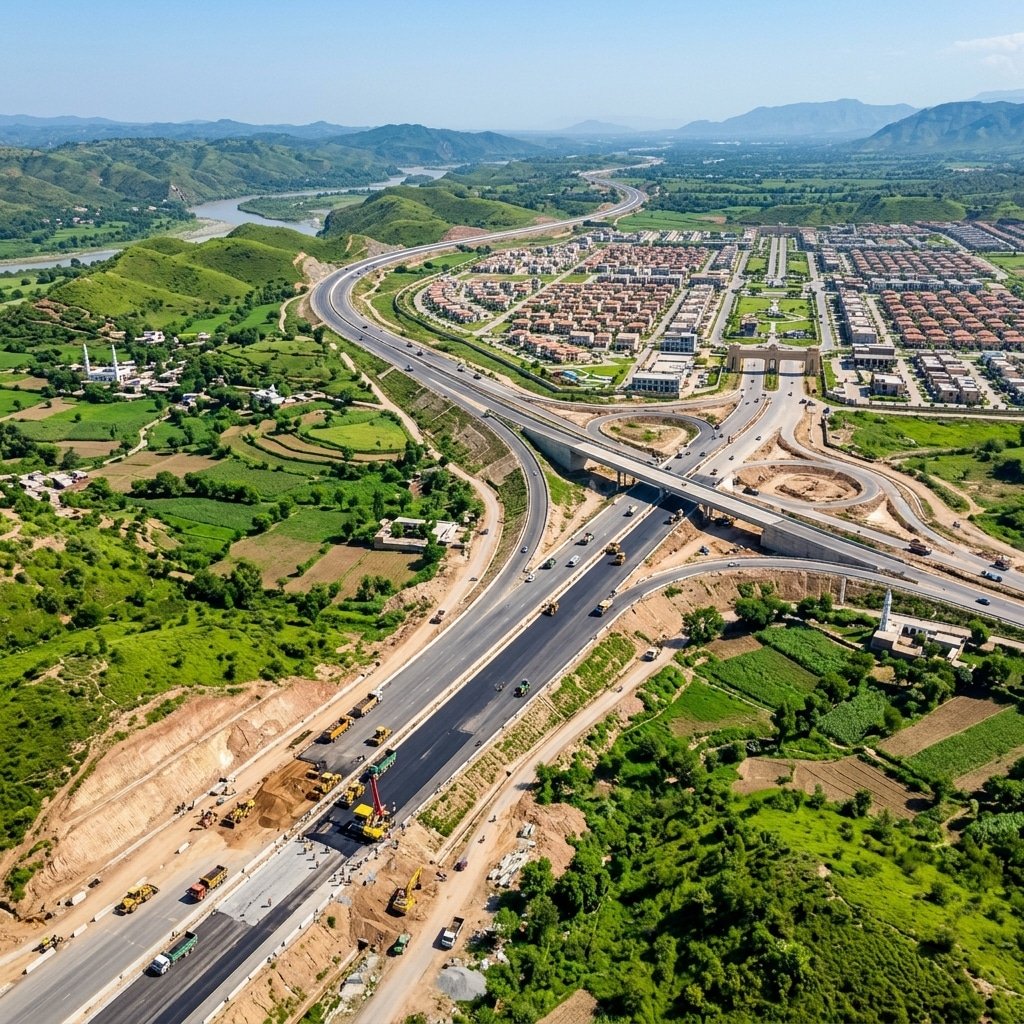

Rawalpindi Ring Road & Beyond: How Infrastructure is Driving Pakistan Property Values in 2026
Introduction: Rethinking “Location, Location, Location”
For decades, the golden rule of real estate in Pakistan has been a simple mantra: “Location, Location, Location.” However, as we progress through 2026, a massive shift in urban development is redefining what makes a property valuable. Today, the new paradigm is entirely focused on “Connectivity, Infrastructure, and Transit.” Property values are no longer just about being in the center of the city; they are about how quickly and efficiently you can travel across it.
The Power of Ring Roads and Transit Corridors
Major infrastructure projects across Pakistan’s major metropolitan areas are fundamentally altering the real estate landscape, unlocking immense value in previously overlooked suburban regions.
The Rawalpindi Ring Road Effect
Perhaps the most prominent example in 2026 is the Rawalpindi Ring Road (RRR). This massive infrastructural artery has completely transformed the investment dynamics of the twin cities (Islamabad and Rawalpindi). By providing a seamless bypass for heavy traffic and connecting remote areas directly to the motorway network, the RRR has triggered a massive real estate boom along its corridor. Housing societies situated near key interchanges have witnessed staggering value appreciation, with some areas reporting a 20% to 40% growth in plot prices over the past year alone.
Lahore and Karachi Follow Suit
Similar trends are visible in Lahore, where the expansion of the southern loops of the Ring Road has turned distant suburbs into highly desirable residential hubs. In Karachi, the development of new industrial and transit corridors, such as the Malir Expressway, is drastically cutting down commute times and driving up property values in the eastern and southern districts of the mega-city.
The Rise of the Mid-Income Housing Hub
This infrastructure boom is directly fueling another major 2026 trend: the explosion of mid-income housing. Because major highways have drastically reduced commute times, developers are now able to acquire cheaper land on the outskirts of cities and build high-quality, affordable housing societies without sacrificing accessibility.
- The Sweet Spot: There is currently a soaring demand for mid-range housing in the PKR 10 million to PKR 40 million bracket.
- Changing Demographics: Young professionals and growing families are prioritizing secure, gated communities with modern amenities (parks, schools, commercial zones) over cramped, expensive city-center apartments.
- Developer Pivot: Major developers have recognized this shift and are pivoting away from ultra-luxury mega-mansions towards compact townhouses and premium apartments that cater to the middle class.
Conclusion: Investing in the Path of Progress
The lesson for real estate investors in 2026 is clear: follow the infrastructure. Buying property in areas that are slated for major highway connections or transit hubs is currently the most reliable strategy for capital appreciation in Pakistan. The outskirts of our major cities are no longer the periphery; thanks to modern connectivity, they are rapidly becoming the new centers of premium real estate.
