
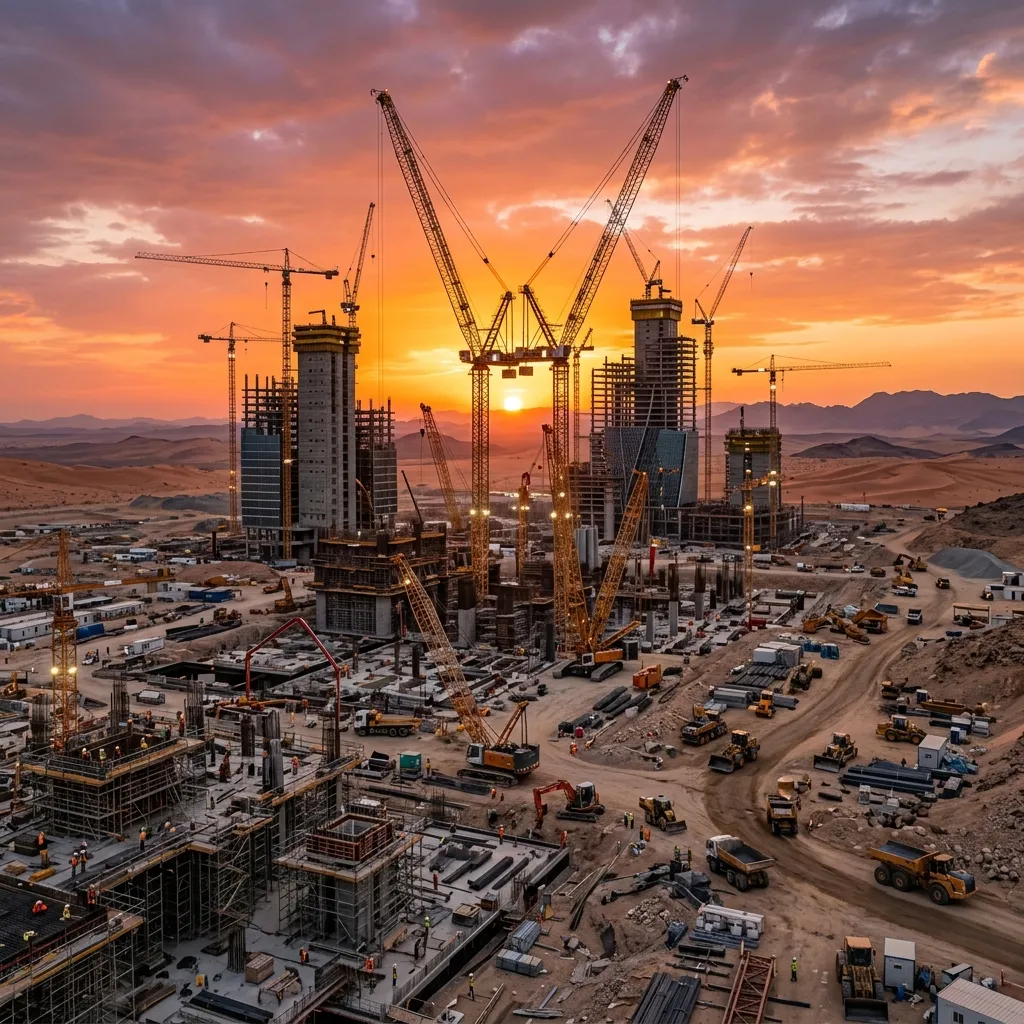

Saudi Arabia’s Construction Boom: Opportunities in Building Materials & Infrastructure (2026)
Saudi Arabia is currently the largest construction site on Earth. Vision 2030 has moved past the planning phase. Steel is going up. Concrete is pouring. The sheer scale of development across NEOM, Red Sea Global, and Qiddiya is straining regional supply chains. This presents a massive, unprecedented opportunity for suppliers and contractors in 2026.
The Supply Chain Bottleneck
Giga-projects demand staggering volumes of raw materials. Local production simply cannot meet the quota. Cement factories are operating at peak capacity. Structural steel is imported by the megaton. This structural deficit translates to lucrative contracts for global suppliers who can guarantee reliable delivery schedules.
Specialized materials face even tighter squeezes. High-grade architectural glass, smart-city cabling infrastructure, and sustainable cooling systems are in perpetual high demand. Procurement directors at major PIF-backed developers are actively diversifying their vendor lists to avoid project delays.
Opportunities for Foreign Contractors
The Saudi Ministry of Investment (MISA) is heavily incentivizing foreign contractors to establish a local presence. You do not just sell to Saudi Arabia; you set up shop there.
Joint ventures are the preferred entry method. Partnering with established local firms provides immediate access to labor networks and navigates the complex Saudization (Nitaqat) requirements. However, 100% foreign ownership of contracting firms is entirely legal and increasingly common for highly specialized engineering outfits.
The focus has shifted sharply toward sustainability. Contractors specializing in LEED-certified construction, renewable energy integration, and water reclamation technologies win bids faster. Price is secondary to execution capability and environmental compliance.
Regional Hubs Beyond Riyadh
Riyadh is the corporate epicenter, but the physical work is dispersed. The Western Region (Jeddah, NEOM, Red Sea) is consuming the lion’s share of infrastructure capital. The Eastern Province remains the industrial and petrochemical backbone, requiring constant facility upgrades.
Logistics are critical. Suppliers who invest in local warehousing and distribution centers near these mega-sites have a decisive competitive advantage over those shipping solely out of Dubai or Bahrain.
Market Realities in 2026
- Material costs fluctuate wildly based on global shipping constraints. Contracts must include escalation clauses.
- Payment terms can be extended. Ensure you have the working capital to float 90-120 day invoice cycles.
- Local content requirements are strictly enforced. Sourcing a percentage of your inputs locally is mandatory for major government contracts.
The Saudi construction sector is not for the faint of heart. It requires immense capital and patience. But the financial upside for those who successfully navigate the procurement bureaucracy is unmatched anywhere else in the world.
)