
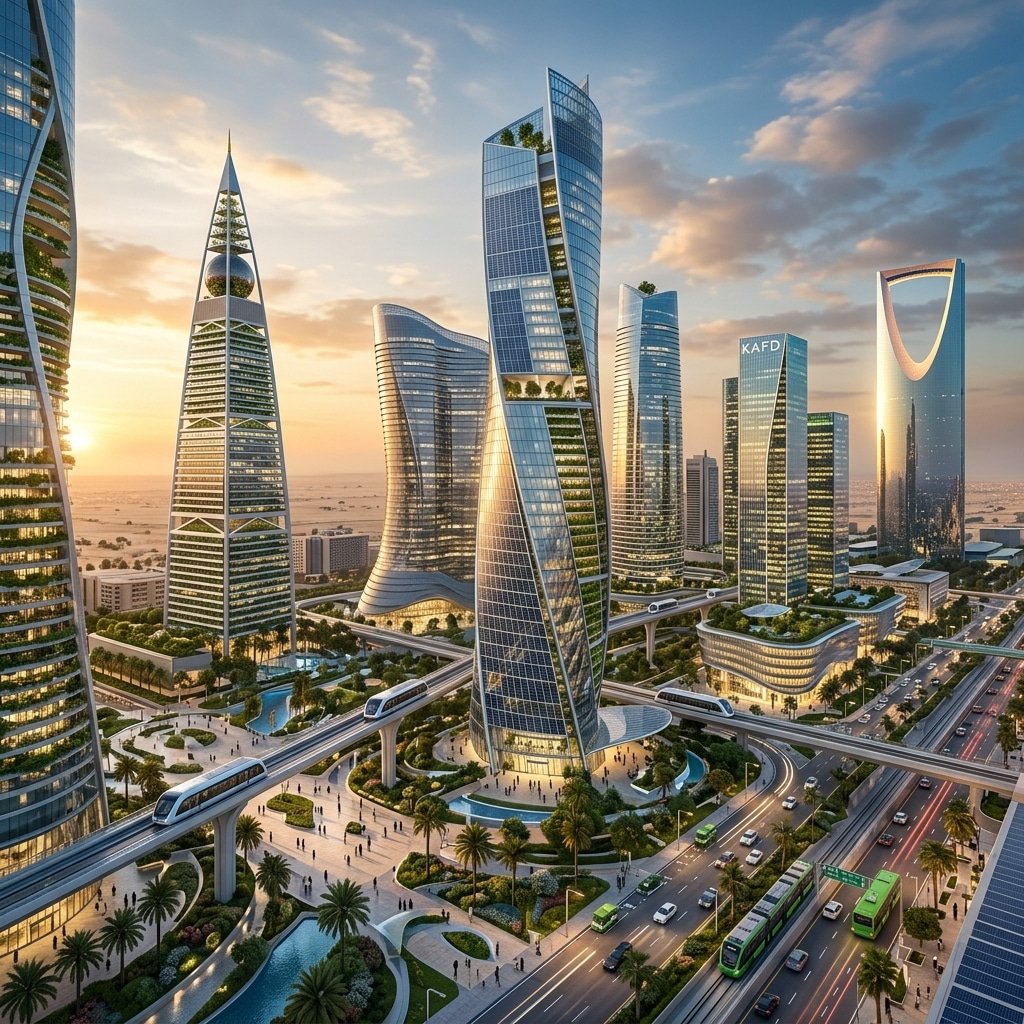

Saudi Real Estate Enters a New Era: Impact of Vision 2030 and New Foreign Ownership Laws
Introduction: The Transformation of a Kingdom
As we navigate through 2026, the Saudi Arabian real estate market is experiencing a historic boom that is capturing the attention of global investors. This unparalleled growth is the direct manifestation of Vision 2030, Crown Prince Mohammed bin Salman’s ambitious framework to reduce the nation’s dependence on oil, diversify its economy, and develop public service sectors such as health, education, infrastructure, recreation, and tourism. The real estate sector sits at the very heart of this transformation, evolving into a highly structured, transparent, and globally integrated powerhouse.
The Power of Mega and Giga-Projects
Saudi Arabia is currently home to some of the largest and most ambitious construction projects on the planet. These “giga-projects” are not merely developments; they are entire new cities and regional ecosystems being built from scratch.
Key Developments to Watch
- NEOM and The Line: Continuing to push the boundaries of urban planning and sustainable living, NEOM remains the crown jewel of Vision 2030, attracting massive international capital.
- Diriyah Gate: Transforming the historic birthplace of the Saudi state into a premier global tourist destination, featuring luxury hospitality and high-end residential offerings.
- ROSHN Projects: Backed by the Public Investment Fund (PIF), ROSHN is rapidly developing massive master-planned communities like Sedra, catering to the booming domestic demand for high-quality, family-oriented housing.
These projects are aggressively scaling to support major global events that Saudi Arabia will host in the coming years, most notably Expo 2030 in Riyadh and the FIFA World Cup 2034.
Revolutionary Foreign Ownership Laws
Perhaps the most significant driver for international investors in 2026 is the sweeping reform of property ownership laws. Effective early this year, new legislation has dramatically expanded the scope for foreign individuals and corporations to own real estate in major Saudi cities, particularly Riyadh and Jeddah.
Digital Transformation and Security
To support this influx of foreign capital, the Saudi Ministry of Municipal and Rural Affairs and Housing has implemented a robust digital registry system. The process of buying, selling, and transferring property is now highly digitized, offering unprecedented transparency and security for international buyers. Furthermore, 2026 has seen the initial rollout of tokenized real estate—blockchain-based fractional ownership that lowers the barrier to entry for smaller investors looking to gain exposure to prime Saudi assets.
Riyadh: The Epicenter of Growth
The capital city, Riyadh, remains the primary focal point of this real estate renaissance. With the government’s mandate requiring multinational companies to establish their regional headquarters in the Kingdom to secure state contracts, Riyadh is experiencing a massive influx of corporate tenants and expatriate workers. This has sent demand for both ultra-prime luxury segments and premium commercial office space soaring.
Conclusion: A Once-in-a-Generation Opportunity
The Saudi Arabian real estate market in 2026 is unrecognizable from a decade ago. It is dynamic, highly regulated, and immensely profitable for those who understand the shifting landscape. Driven by the sheer momentum of Vision 2030 and supported by investor-friendly legislation, KSA offers a once-in-a-generation opportunity for global real estate investment.
